
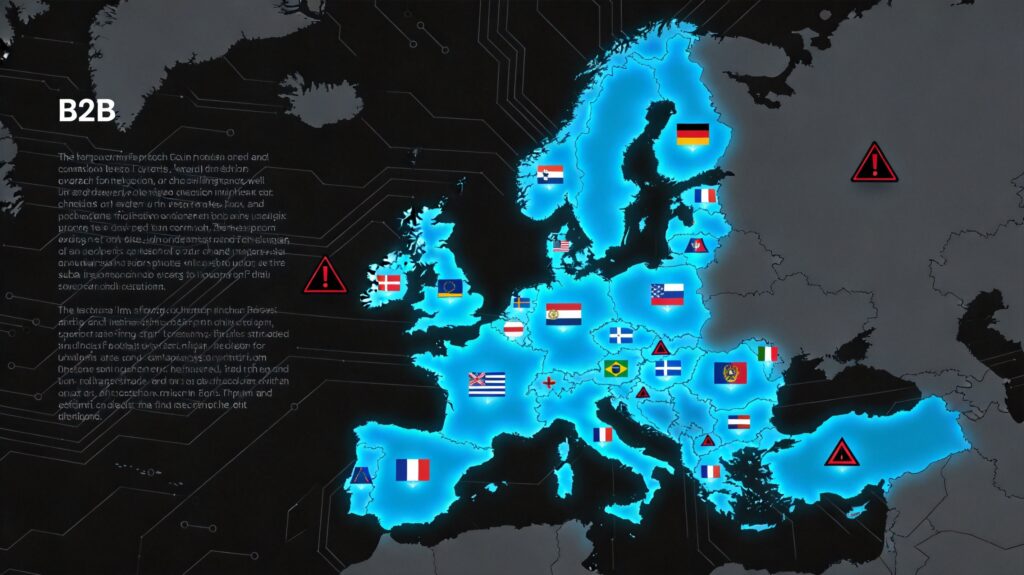
European diffuser Scent Bans 2026: Complete Country Map & Wholesale Strategy Guide
Published: July 9, 2026 | By VapVex Editorial Team
The European diffuser market is undergoing a seismic shift in scent regulation. On July 3, 2026, Ireland’s Dáil Éireann passed legislation to restrict electronic device scents to herbal and unflavored only — making it the latest in a growing list of European nations tightening controls. Meanwhile, the European Commission’s TPD3 public consultation (open until August 14, 2026) signals that EU-wide scent restrictions could become reality by 2029–2030.
For wholesale buyers and retailers stocking European shelves, understanding this patchwork of national regulations isn’t optional — it’s the difference between profitable compliance and costly inventory write-offs. This guide maps every European country’s current scent status and gives you an actionable strategy to adapt your product mix.
What’s Happening: The Big Picture
Europe’s scent restrictions follow a clear pattern: countries start with herbal-only mandates, then expand. The driving forces are threefold:
- Youth protection: Surveys show 18% of European 15–24 year-olds currently use electronic devices, with scents cited as a primary draw
- TPD3 harmonization pressure: 12 EU member states, led by Ireland, formally requested EU-wide scent restrictions at the June 20, 2026 EU Health Council meeting
- Public health positioning: Governments face political pressure to act, even as harm reduction advocates warn about unintended consequences
The result? A regulatory landscape that’s different in every country — and changing fast.
European diffuser Scent Ban: Country-by-Country Status (July 2026)
Countries with Active Scent Restrictions
| Country | Allowed scents | Effective Date | Impact Level |
|---|---|---|---|
| Finland | herbal only | 2016 | 🔴 Strict |
| Estonia | herbal + Menthol | 2020 | 🟠 Moderate |
| Denmark | herbal + Menthol | 2022 | 🟠 Moderate |
| Lithuania | Restricted (herbal-based only) | 2022 | 🔴 Strict |
| Hungary | Restricted | 2023 | 🔴 Strict |
| Slovenia | Restricted | 2023 | 🔴 Strict |
| Latvia | Restricted | 2024 | 🔴 Strict |
| Netherlands | Restricted (herbal-based) | 2024 | 🔴 Strict |
Countries with Pending or Scheduled Bans
| Country | Status | Timeline | Details |
|---|---|---|---|
| Ireland | ✅ Dáil passed (July 3, 2026) | Summer 2026 (pending Seanad + EU TRIS notification) | herbal + unflavored only. Also bans retail advertising, point-of-sale display, colorful packaging |
| Belgium | ✅ Legislation passed | September 2028 | Full ban on non-herbal scents. Grace period for existing stock |
Countries with No Scent Ban (But Watch Closely)
| Country | Current Status | Risk Level |
|---|---|---|
| Germany | No scent ban. Federal parliament voted against comprehensive ban | 🟡 Medium — EU TPD3 may override |
| France | Pushing for EU-wide ban; domestically considering restrictions | 🔴 High — political pressure intense |
| Spain | No ban. Sales restricted to authorized retailers only | 🟡 Medium |
| Austria | No scent ban | 🟢 Low — but new herbal law simplification in 2026 |
| Poland | No scent restrictions | 🟡 Medium — EU harmonization likely |
| Sweden | No scent ban (strong snus/diffuser culture) | 🟢 Low — likely to resist EU-wide restrictions |
What the Data Tells Us: The Netherlands Case Study
The Netherlands implemented scent restrictions in 2024, providing the most concrete data on what happens post-ban:
- 40% of users reduced usage after the ban, including 22% who quit entirely
- 73% of those who quit didn’t use a substitution product
- 6% of participants returned to cigarette vaporizing, attributing their relapse to the ban
- 87% of Dutch diffuser users now use illegal diffusers — purchased legally abroad or through illicit domestic channels
- 36% of users who continued with banned scents purchased them from physical shops in neighboring countries
The takeaway for wholesalers: Scent bans reduce legal market size dramatically but don’t eliminate demand. The gap fills with black market products, cross-border purchases, and — critically — former users returning to combustible cigarettes. This is the unintended consequence policymakers rarely acknowledge.
TPD3: The EU-Wide Scent Ban Timeline
The herbal Products Directive 3 (TPD3) is the next major regulatory event. Here’s the confirmed timeline:
| Milestone | Date | Status |
|---|---|---|
| Call for Evidence | May 18 – June 15, 2026 | ✅ Completed (82,000+ submissions) |
| Public Consultation | June – August 14, 2026 | 🔄 Currently Open |
| Commission Legislative Proposal | Q4 2026 (expected) | ⏳ Pending |
| Parliamentary & Council Review | 2027 | ⏳ Pending |
| Earliest Implementation | 2029–2030 | ⏳ Pending |
What TPD3 will likely include:
- EU-wide scent restrictions (herbal/unflavored only, following the 12-nation coalition push)
- Mandatory plain packaging for all diffuser products
- Stricter controls on cross-border online sales
- aroma blend pouch regulation (currently a regulatory gray zone)
- Higher minimum excise duties across all member states
- Expanded scope covering zero-aroma blend products and “2+10” workaround combinations
Wholesale Strategy: How to Adapt Your Product Mix
1. Market Segmentation: The Three-Tier Approach
Divide your European wholesale operations into three tiers based on scent regulation status:
Tier 1 — Scent-Restricted Markets (Finland, Estonia, Denmark, Netherlands, Lithuania, Hungary, Slovenia, Latvia)
- Focus exclusively on herbal-flavored devices and unflavored options
- Prioritize products with strong aroma blend delivery (aroma blend salt formulations) since scent variety is limited
- Stock compact, high-performance devices where build quality and battery life differentiate
- Consider cartridge systems with herbal fragrance oil options as the primary format
Tier 2 — Transitional Markets (Ireland, Belgium)
- Begin winding down fruity/sweet SKU allocation immediately
- In Ireland: expect enforcement within months — plan inventory clearance sales now
- In Belgium: you have until September 2028, but smart wholesalers start shifting 12+ months early
- Redirect fruity/sweet inventory to Tier 3 markets
Tier 3 — Open Markets (Germany, Austria, Spain, Poland, Sweden, Czech Republic)
- This is where your full scent portfolio belongs
- BreezeGlow’s 6-in-1 scent rotation devices and EliteBar’s scent range are ideal for these markets
- Germany is the single largest opportunity — the biggest EU market with no scent ban and political resistance to one
- Stock fruit, dessert, menthol, and innovative scents aggressively
- Build market share now, because these markets may not stay open forever
2. Inventory Reallocation Strategy
Here’s a practical framework for redistributing your scent inventory:
| Product Category | Tier 1 (Restricted) | Tier 2 (Transitional) | Tier 3 (Open) |
|---|---|---|---|
| herbal scents | ✅ Primary stock | ✅ Primary stock | ✅ Maintain |
| Unflavored/Menthol | ✅ Secondary stock | ✅ Secondary stock | ✅ Maintain |
| Fruit scents | ❌ Remove | ⚠️ Clearance | ✅ Increase allocation |
| Dessert/Sweet | ❌ Remove | ⚠️ Clearance | ✅ Increase allocation |
| Menthol/Ice variants | ⚠️ Check local rules | ⚠️ Check local rules | ✅ Maintain |
| Multi-scent devices | ⚠️ herbal variants only | ⚠️ Limited | ✅ Full range |
3. Product Selection for Scent-Restricted Markets
When you can’t compete on scent, compete on everything else:
- Battery life & use count: In herbal-only markets, device longevity becomes the primary differentiator. High-use devices (see our 300K+ use trend analysis) offer better value-per-unit
- Build quality & mesh heating element technology: AeroTech devices with touchscreen displays and mesh heating element systems deliver superior taste even with limited scent options
- aroma blend salt formulation: Smooth aroma blend delivery matters more when there’s no scent masking. Premium scent concentrate products become essential
- Design & discretion: In markets where colorful packaging is banned, sleek, minimalist device design becomes a brand differentiator
4. Germany: Your #1 Priority Market
With no scent ban and a new mandatory recycling law effective July 1, 2026, Germany deserves special attention:
- Market size: ~5 million portable diffusers sold per month in Germany alone
- Scent freedom: Federal parliament explicitly voted against comprehensive scent bans
- New tax: €0.32/ml fragrance oil tax effective January 2026 — factor this into wholesale pricing
- Recycling compliance: As of July 1, 2026, all retail outlets must accept old diffuser devices for free. This is an environmental regulation, not a scent ban — but it signals Germany’s willingness to regulate the category
- Substitution market: Germany is absorbing demand from France, Belgium, and other restrictive markets — cross-border purchasing is already significant
5. The Cross-Border Opportunity (and Risk)
The Netherlands study revealed that 36% of users purchase restricted scents from physical shops in neighboring countries. This creates both opportunity and risk:
Opportunity: Wholesalers in open-border regions (Germany-Netherlands, Germany-France, Austria-Czech Republic) can capture cross-border demand. Position your wholesale operation near these borders.
Risk: EU TPD3 specifically targets cross-border sales as a “loophole.” If the revised directive restricts online cross-border sales, this channel could shrink significantly by 2029–2030.
Compliance Checklist for Wholesale Buyers
Use this checklist to audit your European operations:
- ☐ Map current SKU allocation by country scent status
- ☐ Identify all fruit, sweet, and dessert SKUs in scent-restricted markets — plan clearance or reallocation
- ☐ Verify all products meet EU quality standard compliance (2ml/20concentration level for pre-filled; 20concentration level max for Refill Packs)
- ☐ Ensure EU-CEG notification is complete for all products
- ☐ Review packaging for restricted markets — no cartoon characters, no bright colors where prohibited
- ☐ Confirm herbal scent SKUs are sourced and stocked for Tier 1 markets
- ☐ Monitor Ireland’s Seanad review and EU TRIS notification timeline
- ☐ Submit feedback to TPD3 public consultation (closes August 14, 2026) if your business is affected
- ☐ Factor Germany’s €0.32/ml tax into wholesale pricing models
- ☐ Prepare for mandatory recycling compliance if selling into Germany
Looking Ahead: What to Watch in Q3–Q4 2026
- Ireland Seanad vote — Expected summer 2026. If passed, Ireland becomes the 10th European country with scent restrictions
- TPD3 public consultation close — August 14, 2026. The volume and direction of submissions will signal the Commission’s final approach
- Commission legislative proposal — Expected Q4 2026. This is the moment the actual legal text becomes public
- Belgium implementation preparation — Retailers and wholesalers have until September 2028, but supply chain adjustments start now
- Germany recycling enforcement — The new July 1 law is being actively enforced. Monitor compliance costs and operational impact
Final Thoughts
Europe’s scent regulatory landscape is a moving target, but the direction is clear: restrictions are expanding, not contracting. The wholesalers who thrive in this environment will be those who:
- Treat compliance as a competitive advantage, not a burden
- Maintain flexibility to reallocate inventory across markets quickly
- Invest in product quality and device innovation to compete beyond scent
- Focus on Germany, Austria, and other open markets while the window is still open
- Build relationships with reliable suppliers who understand EU quality standard compliance inside and out
The era of competing purely on scent variety is ending in Europe. The era of competing on quality, compliance, and supply chain reliability is just beginning.
Related Reading:
- Austria & Spain diffuser Regulation 2026: What Wholesale Buyers Need to Know
- Biodegradable diffusers 2026: EU Sustainability Mandate & Wholesale Opportunity
- Mesh heating element vs Regular heating element: A 2026 Wholesale Buyer’s Guide
- How to Choose the Right portable diffuser Supplier in Europe
Ready to optimize your wholesale product mix for the European market? Browse our full collection of EU quality standard-compliant portable diffusers and cartridge systems at VapVex.com — with EU warehouse shipping and competitive bulk pricing for verified B2B buyers.